
Cold storage regulations in the USA
US cold storage requirements depend on what you hold, what your business does and where you operate. Start by identifying the rules that apply.
A restaurant freezer and a food manufacturing warehouse do not automatically fall under the same regulatory framework. Product type, processing activity and facility status all matter.
For food cold storage, your starting points are usually:
This guide covers the main frameworks for storing food in the US. Which ones apply depends on what you store and where, so there isn’t one checklist that fits every business. The agencies that inspect your site can tell you what applies.
Not sure which cold storage unit suits your food operation?
.
| Framework | Where it may apply | Why it matters to cold storage |
|---|---|---|
| FDA preventive controls for human food | Covered facilities that manufacture, process, pack or hold food | Hazard analysis, controls, monitoring, corrective action, verification and records |
| Modified requirements for certain storage facilities | Facilities solely storing unexposed packaged food, where the specified conditions apply | Temperature controls for relevant refrigerated packaged food |
| USDA FSIS requirements | Meat, poultry and egg-product establishments regulated by USDA FSIS | Sanitation and HACCP controls suited to the product and process |
| State and local retail food rules | Restaurants, retail food stores and other regulated food service operations | Locally adopted holding, cooling, hygiene and other requirements |
The FDA’s Preventive Controls rule covers many facilities that make, process, pack or hold human food. Some are exempt, and others – including some that only store sealed, packaged food – have modified requirements instead.
Not on its own. The FDA Food Code is a model for regulating restaurants, stores and other food service, and each state or county decides whether and how to adopt it. It isn’t one nationwide rulebook for your cold room.
For example, the Food Code generally requires time/temperature control for safety (TCS) food – perishable food such as meat, dairy and cut produce – to be held at 41°F or below, with some exceptions. The version your state or county has adopted decides what applies to you.
That’s why you shouldn’t copy a temperature from an online chart and leave it at that. Check it against your own process and local rules, then write the limit into the procedure your staff actually use.
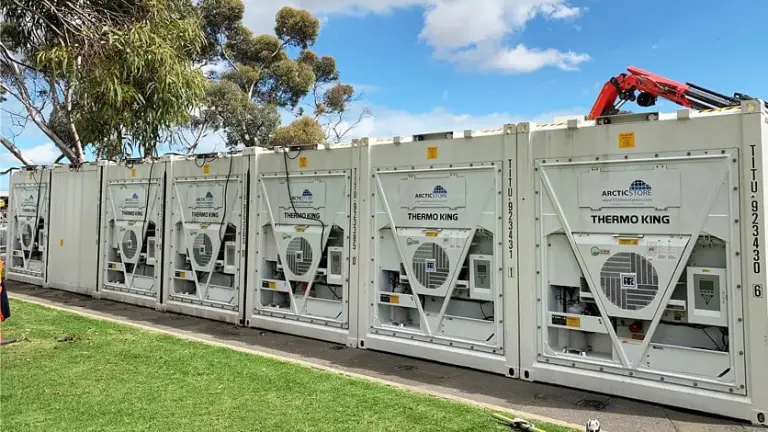
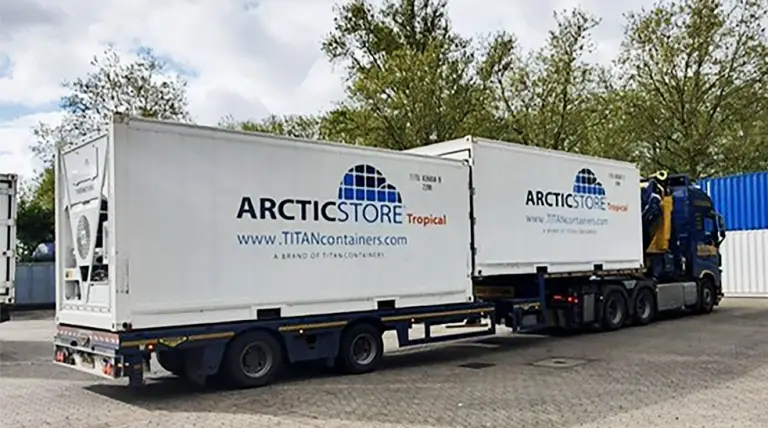
Once you know what your storage has to do, the TITAN team can tell you more about the various models in our ArcticStore collection. We’ll help you match one of our rental units to your exact temperature and monitoring needs.
For refrigerated foods that need temperature control, yes. A warehouse that only stores sealed, packaged food isn’t automatically free of food safety duties, because packaged food that needs refrigeration can still let harmful bacteria grow if it’s held at the wrong temperature.
The FDA has modified requirements for facilities that only store unexposed packaged food (21 CFR 117.206). If you store refrigerated, packaged food that needs temperature control to stop harmful bacteria growing, those requirements cover temperature controls, monitoring, corrective action, verification and records.
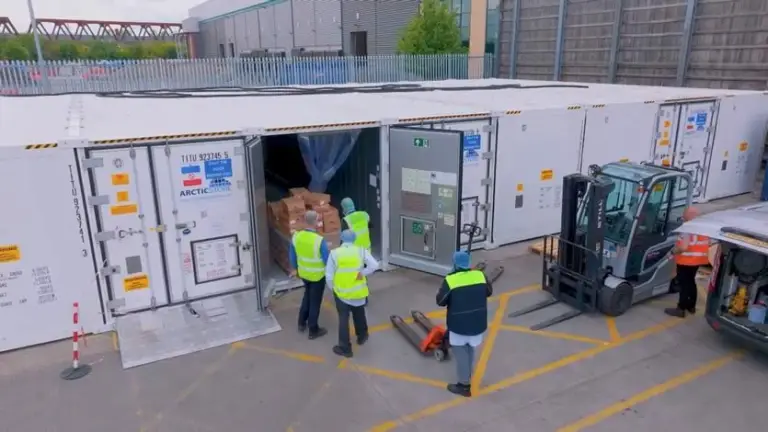
Think about who’s responsible at each stage – receiving, storage and dispatch. A working refrigeration unit is one part of the control. You also need a way to check goods when they arrive and a plan for what to do if the temperature slips.
HACCP – Hazard Analysis and Critical Control Points – is a way of finding what could make food unsafe and deciding how you’ll control each risk. It covers your whole process, and a cold room is one part of it.
Whether the cold room counts as a critical control point – a step where you must control a hazard – is for your hazard analysis to decide, not something to assume. If your meat, poultry or egg product plant is regulated by FSIS, build your HACCP plan around FSIS’s requirements and the rules for your establishment.
A certificate or a useful feature on the unit doesn’t make the rest of your process compliant on its own. Get clear on:
Then choose the equipment to match, so the unit and the procedure fit together.
If something goes wrong, your records should let your team work out what happened to the affected stock. Start with whatever the rules for your operation require, then make sure the records are easy to fill in on a busy shift.
You’ll want to keep:
How long you keep records, and how often you review them, comes from the rules that apply to your operation. There isn’t one period that fits every product and facility.
SmartArctic remote monitoring – fitted on most units in the ArcticStore collection – helps you track container performance. Agree how its data will fit the monitoring, calibration, review and record needs of your own system.
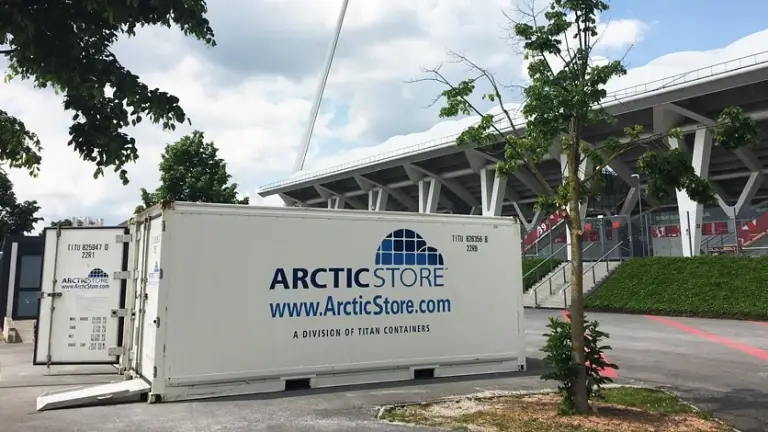
Portable doesn’t mean you can put it anywhere. Before delivery, check where the unit will sit, what electrical work it needs, how people and equipment will reach it safely and whether you need any local approvals.
Renting rather than buying doesn’t change any of that.
Your staff’s safety belongs in the plan too. Cold exposure, slippery floors, loading equipment and emergency exits all need to be covered in your site procedures. OSHA has no specific standard for working in the cold, but employers still have a duty under the OSH Act to protect workers from recognized hazards, including cold stress.
If you’re storing pharmaceuticals or vaccines, follow the separate product and regulatory requirements for that stock. Food storage rules don’t carry over to them.
Before a rented unit arrives, decide how it will fit into your food safety system. Work out:
Then add the unit to your monitoring, cleaning, maintenance and record review routines.
Pick a sample lot and follow it through receiving, storage and dispatch. Check that it stays linked to its records the whole way, including any time it spends on hold. This often shows a gap between a well-written procedure and the way information moves between shifts.
When you talk the plan through with your regulator or quality advisor, describe what the unit will be used for, not just what it is. “Storage of sealed refrigerated ingredients” gives them more to work with than “new container.” Keep their response with your project records, and make sure every follow-up job has a name against it before the first food arrives.
Get a head start on cold chain regulations by telling us more about your operations and what you need. Share details about your product, temperature range, peak capacity and monitoring needs – and include any qualification or documentation requirements if you have them.
Speak with our team about renting cold storage equipment that supports your plan.
No. A description of the equipment doesn’t give you an all-clear for cold storage compliance. That depends on the rules that apply to you, your product, the installation, your procedures and your records.
No. The limit depends on the food, what you’re doing with it and where you are. Take your storage limits from the rules and specifications for your own goods, not from a general chart.
Sometimes. It depends on where you are and how you’ll use the unit, and renting doesn’t exempt you. Check with your city or county before delivery.
What you need depends on what you do, what you store and what kind of facility you run, and some businesses are exempt or have reduced requirements. Work out which rules cover you first, then build the controls and records they call for. A warehouse that only stores certain packaged foods can have different duties from one that also processes them.
Have these ready: your current procedures; temperature and verification records; staff training records; evidence of what you did about any deviations. Be ready to follow a lot from arrival to dispatch and to say who reviews the records. Check that everything describes the setup you have now, including any rented overflow space.

Josefine Falch is Global Marketing Manager at TITAN Containers, responsible for driving global marketing strategy, brand positioning, and lead generation across key industries and markets. With a strong focus on data-driven marketing, international campaigns, and cross-market alignment, she works closely with local teams to support commercial growth and strengthen TITAN’s presence worldwide.