Blast chiller vs blast freezer: what’s the difference?
A blast chiller rapidly cools products to a chilled target. A blast freezer takes them into a frozen state. Often, the same unit serves both needs.
Blast chillers and freezers help businesses in the food production industry – as well as other sectors – remove heat from product quickly.
When businesses need both a chiller and a freezer, a single unit will often do both jobs.
In each case, the unit removes heat quickly using forced cold air. What matters is how cold the product ends up, which isn’t always what the air-temperature display shows.
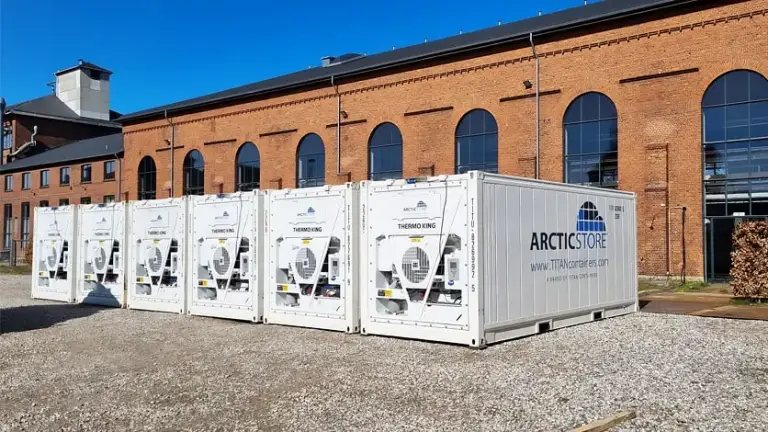
A blast chiller cools food fast. It rapidly blows cold air across the product, dropping the temperature to a chilled target much faster than a standard cold storage unit can.
If you have thousands of pounds of cooked chicken, for example, you’d put it into a blast chiller, drop it to the right temperature, and then transfer it to a cold storage container or cold room.
In many cases, a blast freezer and blast chiller are the same machine, but with a blast freezer you choose a lower temperature to freeze the product. Speed matters for quality – it keeps ice crystals small, which means the food’s structure holds up better when it thaws.
For frozen goods, it’s common practice to blast freeze first, and then transfer to a standard freezer unit.
| Blast chilling | Blast freezing | |
|---|---|---|
| Main outcome | Product brought to a chilled target | Product brought to a frozen target |
| Typical next step | Chilled holding, preparation or dispatch | Frozen holding or dispatch |
| Key process details | Starting temperature, final target and cooling time | Starting temperature, final target, freezing time and quality needs |
| What affects performance | Batch mass, shape, packaging, loading and airflow | The same factors, plus the heat removed during freezing |
A storage freezer – such as a purpose-built cold room or a freezer container – is designed to keep frozen goods frozen. It copes with a little heat leaking in and the odd door opening, but isn’t built to take a warm batch.
If you add a few hundred pounds of warm product to a container full of frozen goods, the freezer has to absorb all that heat at once – and the frozen stock already inside starts to warm up. The batch itself also cools quite slowly, because the freezer can’t push air through it fast enough. The display can still show 0°F while the middle of the batch is warm.
That’s why businesses blast freeze the batch first. If you do fast cooling in one place and holding in another, you can size each space to match the job. You also avoid busy production days clogging the freezer.
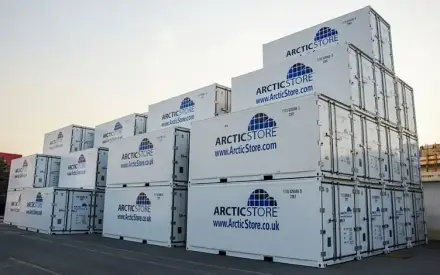
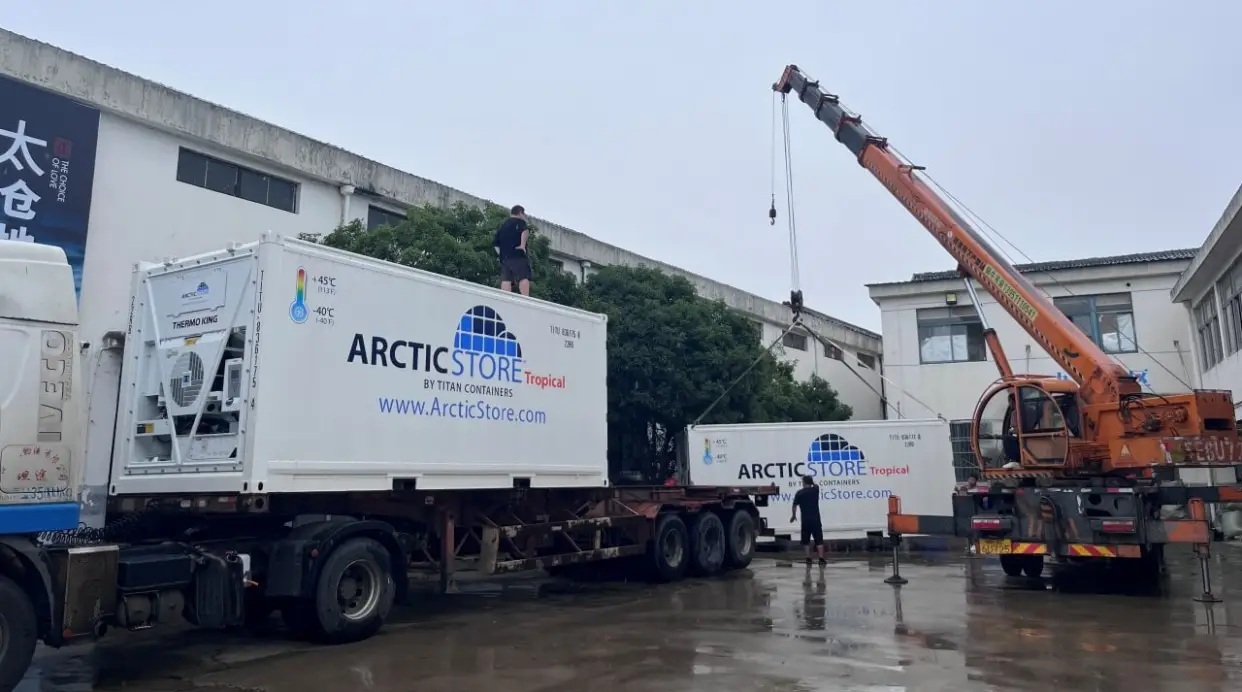
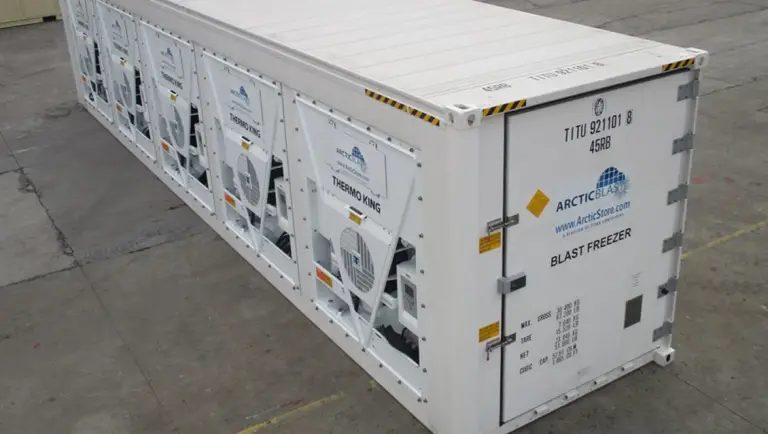
Our ArcticStore containers provide reliable chilled and frozen storage, but that often only covers one side of their cold storage needs. Before storing goods, many clients blast-freeze them in one of our ArcticBlast containers. These are designed for rapid chilling, freezing and tempering and come in 20ft and 40ft sizes.
Talk to us about your batch cooling requirement if you need help matching the process to suitable equipment.
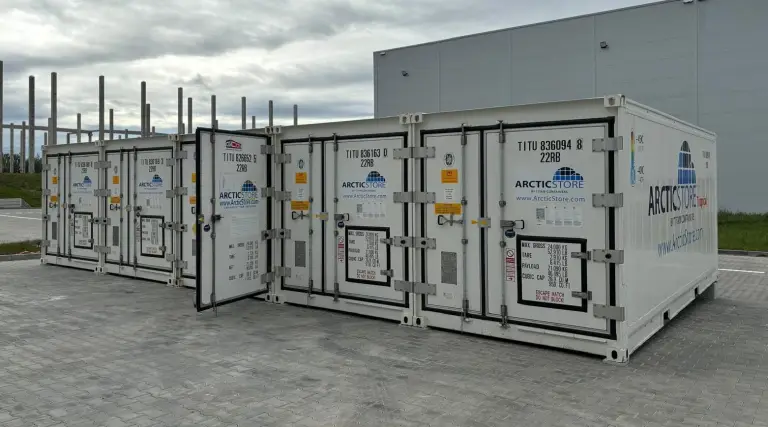
When choosing a blast freezer, talk to your supplier about the product you’re handling and how you’ll load it. Knowing the total weight alone isn’t enough. A shallow tray and a deep, tightly packed carton can cool at different rates – even when they hold the same mass.
TITAN, for example, likes to know your:
If you’re running batches back to back, think about the full cycle: loading, cooling, unloading, checks, cleaning and any required defrost. They all take time. A blast freezer or chiller that completes one batch during a trial may be too small when live production kicks in or increases a little.
When you test, use a realistic load and agree how and where you’ll measure the product. An empty room reaching temperature doesn’t show how fast a batch will cool.
Rapid cooling depends on bringing cold air into contact with the load. Blocked routes and densely packed goods can cause parts of a batch to cool more slowly.
Follow an approved loading pattern, worked out well in advance. Keep the air return clear, allow the specified space between loads, and avoid changing tray or carton arrangements without checking their effect on the overall process.
Once you establish a workable process, make it easy to repeat. Give staff a clear loading diagram and record the batch details that affect the result. Consistency helps you identify whether a change comes from the equipment, the product or the way it was loaded.
For cooked food that requires time and temperature control for safety, the FDA Food Code sets a two-stage cooling rule. The food has to go from +135°F to +70°F within two hours, and to +41°F or below within six hours total.
Those are food safety limits, not a promise about what any chiller can do. Check which Food Code edition your state or county uses, and check your own batches against the limits.
Freezing stops most bacteria growing – but it doesn’t remove them. Chicken that sat on a warm dock for hours can still make someone ill once it’s been frozen.
Terms like “flash freezer” and “shock freezer” sound fast, but there’s no fixed meaning behind them. Suppliers use these terms in different ways, so the name alone won’t tell you how quickly a system freezes your product.
Instead, ask us, and ask anyone else you’re considering renting or buying from, for the same four things:
If you’re comparing air-based blast freezing with another method, look at the whole job. That means how the product is handled, what power source each system needs and how it fits your production line.
Judge each system by the results it delivers, because weighing up flash freezer vs blast freezer vs shock freezer may not give you a meaningful answer, as their definitions overlap.
You’ll want somewhere ready for the goods to go before the first batch finishes. If the holding freezer is full – or nobody’s quite sure where the stock should be moved to – your team ends up waiting around while a finished batch sits there. Slowly warming.
The same goes for the changeover. One batch has to come out before the next can go in and the smoother the handover between production, the blast unit and holding, the more you’ll get out of the equipment.
If you need rapid cooling and a larger cold space, our Arctic SuperStore can combine ArcticStore and ArcticBlast units into one modular cold room. Tell us what you produce, and we’ll design it around that.
It helps to start at the end and work backward. What time do the finished goods have to leave the rapid cooling stage? From there you can map out:
Let’s say production releases several batches close together toward the end of a shift. A blast unit that copes fine with each batch on its own can still end up creating a backlog – and that means warm product waiting around with no clear process.
A different batch pattern, more capacity or a revised production schedule could solve it, but it’s far easier to work out which of those you need before the unit is installed.
When you run your acceptance trials, use the packaging and loading arrangement you’ll actually be using, and note how and where you measured the product temperature so you can repeat it. If the packaging changes later – shallow trays swapped for deeper containers, say – it’s worth going through the process again, because the earlier result won’t apply to the new load.
TITAN has been in the cold storage space for around two decades – longer still in shipping containers. Our experts are on hand to help you find the right blast unit, and if the answer isn’t our ArcticBlast, we’ll tell you.
Send us a few details about your product, batch weight, packaging, starting temperature, target temperature and required cycle time. Add your daily batch count and site details, so we have a full picture.
Get started by requesting an ArcticBlast quote. We’ll assess your rapid cooling needs, and explain how we can help.
Some equipment does both. ArcticBlast is designed for rapid chilling, freezing and tempering. When assessing suppliers, ask if the unit’s capabilities match your actual load.
No. Product size, packaging, airflow and equipment capacity also affect cooling. Compare measured batch performance rather than setpoint alone.
It’s not the most efficient way to operate. Keeping finished stock in your processing space can prevent the next batch from starting, so separate holding space may be more useful.
Check that the trials use comparable products, starting and target temperatures, batch weights, packaging and loading patterns. Ask how and where product temperature was measured. A short cycle for a small test load won’t predict results for a larger production batch with a different shape or arrangement.
Tempering is the controlled warming of frozen product to a set temperature, so it’s ready for the next step – cutting, slicing or mixing, say – without thawing it right through. The target is usually a temperature just below freezing, though it depends on the product. ArcticBlast can do this as well as chilling and freezing.
A blast chiller brings the middle of the food down to 41°F or below, which is the US limit for cold holding. The air inside runs much colder to get there fast, but the food temperature is what counts.
A blast freezer takes the middle of the product down to 0°F or below. ArcticBlast can be set anywhere from -40°F to +113°F, so one unit covers both chilling and freezing.

Josefine Falch is Global Marketing Manager at TITAN Containers, responsible for driving global marketing strategy, brand positioning, and lead generation across key industries and markets. With a strong focus on data-driven marketing, international campaigns, and cross-market alignment, she works closely with local teams to support commercial growth and strengthen TITAN’s presence worldwide.